Cervical cancer has almost no early symptoms, so it often progresses before a woman notices anything unusual. This column covers who is eligible for national cervical cancer screening and how often, what the terms on the result sheet mean, and when further tests are needed. In short, women aged 20 and over should have screening every 2 years, and because an abnormal finding does not immediately mean cancer, the next step is simply a repeat test or a more detailed examination that matches the grade of the result.
Who has national cervical cancer screening, and how often?
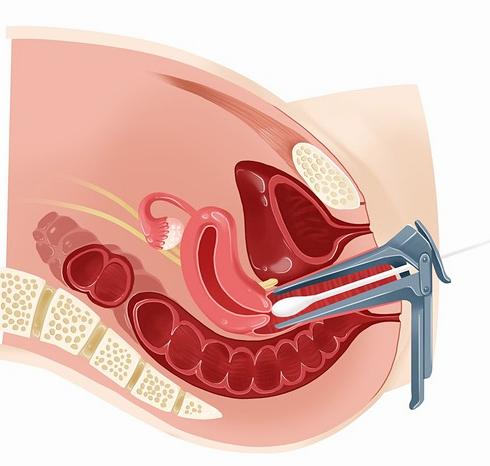
The eligible year for national cervical cancer screening is easy to work out from the last digit of the birth year. For example, women born in 1993, 1995 or 1997 are eligible in 2025 and are screened again in 2027. The cervical cancer test in the national programme is, strictly speaking, a cervical cytology test: a long swab is brushed lightly across the surface of the cervix, and the collected cells are checked for abnormal cells.
A cervical cytology test takes only about 1 to 2 minutes and is not a great burden. The 2-year interval is stressed repeatedly all the same, because cervical cancer responds better to treatment the earlier it is found, yet it has almost no early symptoms and is easily left unnoticed when no test is done.
Does an abnormal finding on the cell test mean cancer?
Terms such as ASCUS, LSIL and HSIL on a cervical cytology result sheet are unfamiliar and can easily add to a patient's worry. However, an abnormal finding does not automatically lead to a diagnosis of cancer. Each term is closer to a marker that shows the degree of cell change and the next stage of testing that fits it.
HSIL, which means high-grade dysplasia, is classed as a precancerous stage just before cancer. Even so, the outlook is generally good when it is found at the precancerous stage and treated early, and this is what makes regular screening so clearly worthwhile. Not putting off the repeat test or biopsy that has been advised after the result is the practical way to stop progression to cervical cancer.
- ASCUS — the shape of the cells is slightly unusual; it sometimes clears up naturally, but a repeat test after 6 months is recommended
- LSIL — low-grade cervical dysplasia; after a biopsy, follow-up observation or treatment is decided according to the diagnosis
- HSIL — high-grade cervical dysplasia, classed as a precancerous stage; treatment is decided according to the biopsy result
Why are an HPV test and colposcopy needed in addition to the cell test?
More than 90% of cervical cancers are caused by infection with human papillomavirus (HPV). Infection does not always lead to cancer, but with a high-risk type of the virus the likelihood of progression to cancer rises. For this reason an HPV test can be understood as a test that checks in advance how likely cancer is to develop.
Colposcopy is the stage that follows when an abnormal finding has been confirmed on a cell test or similar examination. The cervix is magnified and observed directly, and if necessary a small piece of tissue is removed for a biopsy on the spot, so it plays an important part in diagnosing cancer early. Because cervical cancer is a cancer whose causative virus has been identified, HPV vaccination can greatly lower its incidence, which is also worth discussing during a consultation.
- Cervical cytology test — the basic test, in which cells are collected from the surface of the cervix and checked for abnormal cells
- HPV test — checks for infection with human papillomavirus, the main cause of cervical cancer, to gauge the risk of cancer in advance
- Colposcopy — the cervix is magnified and observed directly, and if necessary a small piece of tissue is removed for a biopsy